
Why Your Lower Back Is Stiff Every Morning (And How to Fix It)
- Bill Smith
- 3 days ago
- 7 min read


Most morning lower-back stiffness is mechanical, meaning it comes from fluid changes in your spine and hours of stillness, and it usually eases within 20 to 30 minutes of gentle movement. If your stiffness regularly lasts longer than 30 to 60 minutes, or shows up with leg numbness, tingling, or weakness, that pattern points to something more than a rough night’s sleep and deserves a professional look.
TL;DR:
Morning back stiffness lasting longer than 30 to 60 minutes or accompanied by numbness, tingling, or weakness indicates a need for professional evaluation.
Sleeping position, mattress age, and pillow support significantly influence stiffness, with medium-firm mattresses and proper pillow placement providing relief.
Gentle movement before getting out of bed, applying heat or cold appropriately, and strengthening core and glute muscles can reduce recurring stiffness effectively.
Persistent or worsening stiffness despite self-care routines warrants assessment for systemic or inflammatory conditions like arthritis or ankylosing spondylitis.
Immediate medical attention is necessary if neurological symptoms, saddle numbness, or loss of bladder control develop.
Table of Contents
Why Is My Back Stiff in the Morning? The Real Causes
Your spinal discs act like small sponges. While you sleep, they reabsorb fluid and swell slightly, which makes your lower back genuinely stiffer at 6 a.m. than it was at 6 p.m. the night before. Add in seven or eight hours without movement, and the joint fluid that normally lubricates your spine thickens up, too. We tell patients at Chirocompassion this is one of the most misunderstood parts of morning back pain: you’re not injured when you wake up stiff. You’re just under moved.
Sleep position plays a bigger role than most people assume. Stomach sleeping arches the lower back all night, and a mattress that’s too soft lets your hips sink while your shoulders stay put, twisting the spine out of alignment for hours. Recent overexertion, like yard work or a new workout, can also produce delayed-onset muscle soreness that mimics stiffness but resolves within a few days on its own.
The pattern matters more than the sensation itself. A few signals that separate ordinary stiffness from something that needs closer attention:
Duration: Mechanical stiffness eases in well under 30 minutes; inflammatory stiffness often lingers 30 to 60 minutes or more.
Location: One-sided stiffness tends to be mechanical or muscular; stiffness affecting both sides of the lower back can point toward inflammatory arthritis or ankylosing spondylitis.
Company it keeps: Fatigue, low-grade fever, or stiffness in multiple joints (hands, hips, knees) suggests a systemic, inflammatory cause rather than a sleep-related one.
Age of onset: Degenerative disc disease and spinal arthritis become more common with age, and spinal arthritis affects up to 95% of people over 60.
Morning Back Pain Remedies You Can Use Today
You don’t need special equipment to feel better this week. A few adjustments, applied consistently, do most of the work.
Move before you stand. Two minutes of gentle motion while still lying in bed warms up the joints before they bear weight, which is exactly why a slow, deliberate wake-up beats jumping straight out of bed.
Choose heat or cold based on timing. If you strained your back within the last 24 to 48 hours, cold therapy calms inflammation. For stiffness that’s been building for weeks or months, a heating pad or warm shower relaxes tight muscles and improves circulation. Keep heat below a comfortable warm setting, use an auto-shutoff pad, and never fall asleep on one.
Fix your pillow placement. Back sleepers benefit from a pillow under the knees; side sleepers should keep one between the knees to keep the spine neutral overnight. Stomach sleepers get the least support and may want to transition to side sleeping gradually.
Use OTC options wisely. A short course of an over-the-counter NSAID like ibuprofen can take the edge off acute stiffness, but leaning on it for weeks at a time masks a problem instead of solving it. If you find yourself reaching for pain relievers most mornings, that’s a signal to look deeper, not a long-term plan.
Pro Tip: Keep a heating pad or warm washcloth within arm’s reach of your bed. Applying gentle heat for five minutes before your feet even touch the floor makes the whole standing-up process noticeably easier.
A Two-Minute Mobility Routine to Do Before You Get Out of Bed
This sequence takes less time than brewing coffee and targets the exact stiffness pattern most people wake up with.
Ankle pumps and circles (30 to 60 seconds). Flex and point your feet, then rotate your ankles in slow circles. This gets blood moving without asking your back to do anything yet.
Knee hugs and pelvic tilts (30 to 60 seconds). Lying on your back, pull one knee toward your chest, hold briefly, and switch sides. Follow with gentle pelvic tilts, flattening your lower back into the mattress and releasing.
Roll and rise (3 repetitions). Roll onto your side, use your arms to push up to sitting rather than crunching forward, then stand up slowly. Repeat the sit-to-stand motion three times to wake up the hips and lower back together.
Stand and walk (1 to 2 minutes). Finish with a few standing pelvic tilts, then walk around the room. If you feel sharp or radiating pain at any point, stop and reassess rather than pushing through it.
A short bedside movement sequence like this often reduces stiffness within days of consistent use, which makes it one of the highest-value habits you can build for your back.
Is Your Mattress or Pillow Making Stiffness Worse?
Your sleep setup deserves an honest audit before you assume the stiffness is purely physical.
Check your mattress age. General guidance points to replacing a mattress every 6 to 8 years, and visible sagging or ongoing stiffness that started around the same time as a new mattress is worth investigating.
Match firmness to your body. Medium-firm mattresses tend to support the spine better than very soft or very firm options for most sleepers. If replacement isn’t in the budget yet, a supportive topper can buy you time.
Simplify your pillow setup. Stacking multiple pillows under your head throws off neck and spine alignment. One supportive pillow for your head, plus a targeted pillow at the knees, does more good than a mountain of cushions.
Why Strengthening Your Core and Glutes Reduces Recurring Stiffness
Weak core and glute muscles leave your spine to absorb stress it wasn’t built to handle alone overnight, and this deconditioning is a bigger driver of recurring morning stiffness than most people realize. Building strength back up doesn’t require a gym membership.
Pelvic bridges activate the glutes and lower back extensors together, building the support structure your spine leans on while you sleep.
Bird dogs train core stability without spinal loading, making them safe even during a stiff flare-up.
Dead-bug progressions build deep core control gradually, which matters more for lasting relief than doing crunches.
Progressive strengthening programs reduce both disability and recurrence for many mechanical low-back cases, but the operative word is progressive. Jumping into an intense routine after months of inactivity tends to backfire. If home exercises aren’t moving the needle after a few weeks, or if pain limits your ability to do them safely, a structured rehab plan under professional guidance gets you further than guessing on your own.
When to See a Doctor About Morning Back Stiffness
Certain signs mean self-care should wait for a clinical opinion.
Get evaluated immediately if you notice new numbness or weakness in your legs, numbness in the saddle region, loss of bladder or bowel control, a high fever alongside back pain, or rapidly worsening weakness.
Schedule an evaluation soon if stiffness regularly lasts longer than 30 to 60 minutes or keeps getting worse despite consistent self-care efforts.
Start with the right provider. Primary care physicians, physical therapists, and chiropractors are all reasonable first contacts depending on your symptoms and what’s available to you; go to emergency care for any neurologic red flags listed above.
What a Chirocompassion Assessment Looks Like
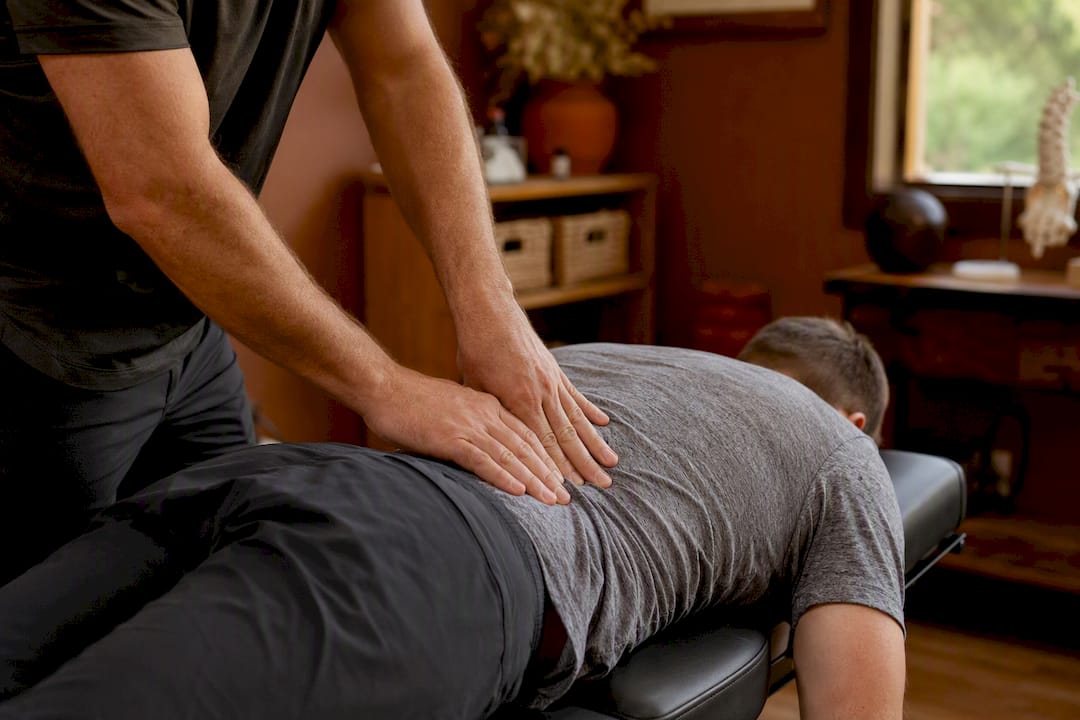
At Chirocompassion, an evaluation for morning stiffness starts with a movement screen and targeted orthopedic tests to pinpoint whether the cause is mechanical, postural, or something requiring further workup. If appropriate, that visit includes gentle manual therapy or a chiropractic adjustment, plus a personalized rehabilitation and mobility plan you take home. Services like electrotherapy support recovery for patients dealing with more stubborn stiffness, and walk-in availability means you don’t have to wait weeks to get answers.
A Clinician’s Honest Take on Morning Stiffness
Most people who commit to the bedside routine and fix their sleep setup notice real improvement within a couple of weeks. Keep a simple note of how long your stiffness lasts each morning. If that number isn’t shrinking, or if you notice any numbness or weakness creeping in, that’s your cue to get evaluated rather than wait it out. If you’d rather have someone assess your spine directly, coming in for a hands-on visit is always a reasonable next step, not a last resort.
— James
Ready for Relief That Lasts Longer Than a Warm Shower?
Self-care handles a lot of morning stiffness, but it has limits. If your stiffness is sticking around past 30 minutes, showing up unevenly, or simply not responding to the routine above after a few weeks, that’s the point where a hands-on assessment saves you months of guessing. Chirocompassion offers walk-in visits, so you can get evaluated without waiting weeks for an opening, and our fee-for-service model with a suggested donation option keeps care accessible even if a traditional appointment schedule doesn’t fit your life.

A visit typically includes a movement screen, a chiropractic adjustment if it’s appropriate for your presentation, and a rehab plan built around your specific stiffness pattern rather than a generic handout. If home care has plateaued or you noticed any red-flag symptoms above, book online or walk in for an assessment this week.
Sources
For deeper detail on the causes and clinical thresholds covered here, the Cleveland Clinic’s guide explains degenerative causes and red flags, the Sleep Foundation covers overnight disc physiology, and Mayo Clinic offers sleep-position guidance worth bookmarking.
This article is general information, not a substitute for advice from a qualified doctor. Consult a qualified healthcare professional about your own circumstances before acting on anything here.
Recommended
Comments