
70% Improved in 1 Month: A Chiropractor Explains Prenatal Chiropractic
- Bill Smith
- 1 day ago
- 10 min read

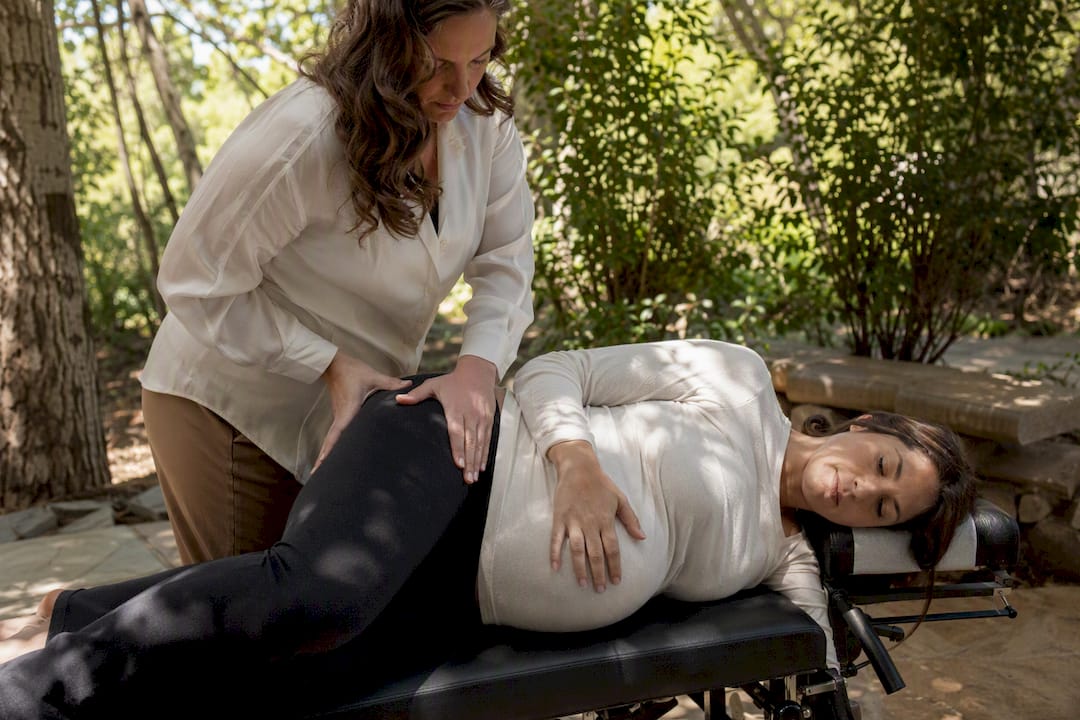
Chiropractic for pregnancy is generally safe for uncomplicated pregnancies, and it carries real evidence behind it, not just tradition. A prospective cohort study found 70% of pregnant patients with low back pain felt improved within a month, rising to 90% by six months. A multidisciplinary consensus now backs pregnancy-tailored care for common musculoskeletal pain. Still, talk with your prenatal provider first if you have any bleeding, high blood pressure, or other red flags.
TL;DR:
Chiropractic care leads to significant pain relief for most pregnant patients with low back and pelvic girdle pain within weeks, with 70% improving in one month and 90% in six months.
The safest and most effective treatment combines manual therapy with exercise and patient education, tailored to each trimester’s changes and needs.
The Webster Technique may help optimize fetal positioning, but current evidence is mostly practitioner-reported, and it should never replace medical fetal monitoring.
Contraindications such as unexplained bleeding or high blood pressure require stopping manual therapy and consulting your prenatal provider.
Always verify your chiropractor’s pregnancy-specific credentials and ensure clear communication with your OB or midwife before starting treatment.
Table of Contents
How Chiropractic Care Can Help During Pregnancy
Your body changes shape faster during pregnancy than at almost any other point in adult life, and your spine and pelvis absorb most of that shift. As your uterus grows, your center of gravity moves forward, your lower back curves more deeply, and your pelvis tilts to compensate. We see this constantly at Chirocompassion: patients who never had back troubled before suddenly show up in the second trimester wondering why standing up from a chair feels like a small ordeal.
Part of the reason lies in a hormone called relaxin. It loosens the ligaments around your pelvis and spine to prepare your body for birth, but that same laxity makes joints less stable and more prone to irritation. Add “intrauterine constraint,” the growing pressure of the uterus on surrounding structures, and you get a recipe for the low back pain, pelvic girdle pain, and sciatica-like symptoms that affect a huge share of pregnant patients at some point.
Chiropractic adjustments work by restoring more normal motion and alignment to joints that have become restricted or unevenly loaded. When your pelvis sits level and your spine moves through its full range, the muscles around it don’t have to work as hard to keep you upright, and nerve irritation tends to ease. This is pain modulation in practice: adjusting the joint changes the signals your nervous system is receiving, which can reduce the sensation of pain even before full healing occurs.
The benefits reported in clinical and practitioner literature go beyond a looser lower back:
Meaningful reductions in low back and pelvic girdle pain, often within weeks of starting care
Improved mobility for everyday tasks like getting out of bed, walking, and reaching
Reported associations with shorter labor times in some observational data, discussed further below
Anecdotal and practitioner-reported improvement in nausea for some patients, though this isn’t well studied
No single adjustment does all of this on its own. The consensus best-practice statements are explicit that manual therapy works best paired with exercise and patient education, not delivered in isolation. A chiropractor who only cracks your back and sends you home isn’t giving you the full picture of what evidence-based prenatal care looks like.
Pro Tip: Ask your chiropractor to show you two or three simple stretches you can do at home between visits. The combination of hands-on care and daily movement tends to hold gains longer than adjustments alone.
What the Evidence Says Now
The research on chiropractic for pregnancy is smaller than we’d like, but it’s more consistent than most people assume. The strongest data comes from a prospective cohort study following pregnant patients with low back pain, which tracked outcomes over one year.
By the numbers: 70% of patients reported improvement at one month, climbing to 90% at six months, with statistically significant drops in both NRS pain scores and Oswestry disability scores.
That’s not a fringe result. A related analysis of the same cohort published in Chiropractic & Manual Therapies confirmed clinically meaningful improvement across most follow-up periods, though it noted that predicting exactly who benefits most, and how quickly, remains inconsistent across patients. Some people feel better in days. Others take longer, and a handful don’t respond as well, which is part of why individualized care matters more than a one-size-fits-all treatment plan.
Older literature tells a more cautious story. A widely cited narrative review of chiropractic and pregnancy concluded that chiropractic evaluation and treatment may be considered a safe and effective way to manage common musculoskeletal symptoms during pregnancy. But the same review was blunt about the state of the science: the literature is sparse, many studies are small, and treatment protocols vary enough between clinics that direct comparisons are difficult.
That gap is exactly why the 2021 best-practice consensus process matters so much. Rather than waiting for a perfect trial that may never come, a multidisciplinary panel of clinicians and researchers worked through rounds of review to agree on 71 specific statements covering:
Pregnancy-adapted physical examination techniques
Informed consent standards specific to prenatal care
Multimodal treatment combining manual therapy, exercise, and patient education
Clear referral triggers for when a chiropractor should send a patient back to their OB or midwife
Here’s the honest, practical read: the evidence is genuinely strong for pain relief, specifically low back and pelvic girdle pain, with consistent improvement across multiple studies and follow-up periods. It’s much thinner for bigger claims like labor duration or fetal positioning outcomes, where the data leans on observational and practitioner-reported findings rather than controlled trials. A responsible prenatal chiropractor will be upfront about that distinction instead of promising outcomes the research can’t yet back up.
The Webster Technique and Fetal Positioning

The Webster Technique is a specific chiropractic adjustment protocol developed to reduce tension and imbalance in the pelvis and surrounding ligaments during pregnancy. It’s not the same as external cephalic version (ECV), which is a medical procedure performed by an obstetrician to manually turn a breech baby from outside the abdomen. The Webster Technique doesn’t attempt to move the baby directly. Instead, it works by releasing stress on the round ligaments and balancing pelvic structures, with the idea that a more balanced pelvis gives a baby more room to settle into an optimal position on its own.
Practitioners typically introduce the technique in the third trimester, often when a breech or posterior position has been identified, though many chiropractors use it earlier as a general part of prenatal care regardless of position. Practitioner surveys have reported high self-reported success rates for babies turning to a head-down position following a series of Webster adjustments, and some clinical reports link the broader pattern of prenatal chiropractic care, including Webster-style work, to shorter labor times in observational data.
Here’s where we need to be straight with you: those success numbers come mostly from practitioner-reported surveys, not controlled trials. A narrative review of the pregnancy chiropractic literature points out that higher-quality research on technique-specific outcomes like this remains limited. That doesn’t mean the technique doesn’t help. It means you should hold the claim with the right amount of confidence, not more.
Never treat the Webster Technique as a replacement for medical monitoring of fetal position
Always keep your OB or midwife informed if you’re pursuing chiropractic care specifically for a breech presentation
Ask whether your chiropractor holds Webster certification through the International Chiropractic Pediatric Association (ICPA), the credentialing body most associated with this training
Pro Tip: If you’re past 34 weeks and your provider has noted a breech position, ask your chiropractor and your OB to talk to each other directly. Coordinated care beats working with two providers who never compare notes.
Safety, Contraindications, and When to Pause Care
Chiropractic care during pregnancy carries a favorable safety profile overall. The best-practice consensus statements note that severe adverse events from spinal manipulation therapy are rare, and the adverse effects that do occur are usually mild and temporary, most commonly muscle soreness that resolves within 24 hours.
That doesn’t mean every pregnancy is a candidate for chiropractic care at every stage. Certain conditions call for pausing or avoiding manual therapy until you’ve been cleared medically:
Vaginal bleeding of unknown cause. Any unexplained bleeding needs obstetric evaluation before chiropractic treatment continues.
Preeclampsia or unmanaged high blood pressure. These conditions require medical management first; manual therapy is not a substitute.
Signs of active preterm labor. Contractions, unusual pelvic pressure, or fluid leakage before term warrant an immediate call to your provider, not a chiropractic appointment.
Certain spinal pathologies. Conditions like unstable fractures, tumors, or specific structural abnormalities are contraindications regardless of pregnancy status.
Placental abnormalities such as placenta previa. These require your OB’s explicit input before any manual therapy is considered.
Just as a doctor would pause a medication or procedure for these same warning signs, a chiropractor should pause treatment and defer to your prenatal provider the moment any of these appear, no matter how far along your pregnancy is or how many prior visits went smoothly.
Beyond contraindications, a pregnancy-aware chiropractor makes physical adaptations as your body changes. Side-lying positioning replaces face-down tables once your belly makes that position impossible. Specialized pregnancy tables often include a cutout or drop-away section so there’s no pressure on your abdomen during treatment. Pelvic blocks, wedge-shaped supports placed under the pelvis, help restore balance gently without direct force through the belly.
Good documentation matters here too. Informed consent for prenatal care should spell out obstetric clearance status, any known contraindications, the expected benefits of treatment, and roughly how many visits your chiropractor anticipates. That paperwork isn’t bureaucracy for its own sake. It’s the paper trail that keeps your chiropractor and your OB or midwife working from the same information.
What to Expect at a Prenatal Chiropractic Visit
Your first prenatal visit should look noticeably different from a general adjustment appointment. Expect a detailed intake covering your due date, any complications flagged by your OB or midwife, and current symptoms rated on a pain scale, the same NRS scoring used in the cohort research showing such strong improvement rates. A thorough chiropractor will also check your posture and pelvic alignment standing and, when appropriate, confirm you don’t have any of the red-flag conditions covered above.
Treatment itself usually combines a few elements rather than a single technique:
Side-lying or pregnancy-table adjustments that avoid pressure on your abdomen
Gentle joint mobilizations for areas that are restricted but not ready for a full adjustment
Soft tissue work to ease tight muscles around the low back, hips, and glutes
Pelvic support blocks placed to balance the pelvis without direct force on the belly
A short list of exercises or stretches to continue at home between visits
Most patients notice some relief within the first one to three visits, consistent with cohort data showing improvement as early as one month into care. If you haven’t seen any change after four to six sessions, that’s a signal worth discussing, either for a change in approach or a referral to physical therapy or back to your OB.
A few practical notes: wear comfortable, stretchy clothing since you’ll be moving through positions that a stiff pair of jeans won’t accommodate. Bring any relevant records from your OB, especially if you’re managing a specific complication. And don’t be shy about telling your chiropractor exactly where it hurts and when. Vague descriptions lead to vague treatment plans.
How to Choose a Prenatal Chiropractor
Not every chiropractor has pregnancy-specific training, and that distinction matters more here than in almost any other area of chiropractic care. Here’s how to vet one properly.
Check for pregnancy-specific credentials. Look for Webster certification, involvement with the International Chiropractic Pediatric Association (ICPA), or postgraduate designations like DACCP or CACCP, which indicate advanced training in prenatal and pediatric chiropractic care.
Ask direct questions on your first call. How many pregnant patients do they see in a typical month? What’s their plan if you develop a complication mid-treatment? Will they communicate directly with your OB or midwife if needed?
Watch for red flags. Avoid anyone who guarantees a specific labor outcome, who resists coordinating with your prenatal provider, or who skips informed consent entirely. Confidence is good; certainty about biology is not something any honest provider offers.
Know when chiropractic isn’t the right first stop. If your pain involves numbness, weakness, or radiates sharply down one leg, or if you have any of the contraindications listed earlier, an obstetric evaluation or physical therapy referral should come first.
Pro Tip: A provider who asks to see your prenatal records or wants to speak with your OB before starting care isn’t being difficult. That’s exactly the kind of coordination the best-practice consensus statements recommend.
The Chirocompassion Perspective on Prenatal Care
I’ve worked with enough pregnant patients over the years to know that most of them aren’t looking for a miracle. They’re looking for relief from a specific ache that’s making it hard to sleep, sit at a desk, or chase around a toddler while carrying the next one. What the research keeps confirming, and what we see daily, is that a measured, evidence-aligned approach works better than an aggressive one.
At Chirocompassion, that means adapting technique to each trimester, pairing every adjustment with exercises the patient can actually keep up with, and never treating a pregnant patient like a routine case. We built our walk-in model specifically so care doesn’t require jumping through scheduling hoops when your back finally gives out on a Tuesday afternoon. Since 2009, that philosophy of accessible, personalized care has shaped how we treat every patient who walks through our doors, expectant mothers included.
— James
Booking Prenatal Chiropractic Care at Chirocompassion
Chirocompassion has offered affordable chiropractic care in Palm Bay since 2009, and pregnant patients are a regular part of our walk-in model, not an afterthought squeezed into a general schedule. Our team works with pregnancy-adapted adjustment techniques designed to relieve low back and pelvic pain without abdominal pressure, alongside pregnancy-safe modalities and simple exercises you can keep up between visits.

Coming in for your first prenatal visit is straightforward. Bring any recent notes from your OB or midwife, wear something you can move comfortably in, and be ready to describe exactly where and when your pain shows up. We’ll also walk you through how we handle patient records so you know your information stays protected.
If you’re also navigating the weeks after delivery, postpartum recovery products from our partners at SweeTee can complement the physical recovery work we do in the clinic.
You don’t need a referral to walk in, and you don’t need to wait weeks for an opening. Book your visit online or stop by our Palm Bay clinic directly to get started.

Key Research Behind This Article
The clinical claims in this article draw from a small but meaningful body of published research and consensus guidance. The prospective cohort study on pregnant patients with low back pain provides the strongest outcome data, tracking pain and disability scores over a full year. A companion analysis in Chiropractic & Manual Therapies adds further follow-up detail. The narrative review in the Journal of Chiropractic Medicine offers useful historical context and appropriate caution about evidence gaps. The 2021 best-practice consensus statements remain the clearest clinical guidance available for safe, pregnancy-adapted care. Additional context on credentials and safety comes from the American Pregnancy Association and Henry Ford Health.
Sources
Recommended
Comments