
Cold Plunge for Recovery: What the Evidence Really Shows
- Bill Smith
- 2 days ago
- 14 min read

Short answer: cold plunges reliably reduce next-day muscle soreness and lower common muscle-damage markers, with the strongest effect around 24 hours after exercise. That benefit comes with a real trade-off. If you’re chasing muscle growth, plunging immediately after lifting may work against you. Anyone with heart or blood pressure concerns should talk to a clinician before stepping in.
TL;DR:
Cold water immersion reduces muscle soreness and markers of muscle damage most effectively around 24 hours after exercise, with no proven benefit of colder temperatures within 5°C to 15°C.
Using cold plunges immediately after resistance training may hinder muscle growth by blunting inflammatory and nutrient delivery signals essential for hypertrophy.
Partial immersion targeting the legs and hips provides soreness relief with less cardiovascular strain, making it safer for people with heart risks.
Cold water therapy is most beneficial for endurance recovery and short-term soreness, but overuse or improper timing can counteract training adaptations.
Individuals with heart conditions, uncontrolled blood pressure, or recent injuries should seek medical clearance before cold immersion to avoid cardiovascular risks.
Table of Contents
Cold Plunge for Recovery: What the Meta-Analyses Actually Found
How Cold Water Changes Inflammation, Blood Flow, and Pain Perception
A Safe Cold Plunge Protocol: Temperature, Time, and What to Do After
Who Should Avoid Cold Plunges (and the Warning Signs to Watch For)
How Compassion Chiropractic Builds Cold Plunge Into a Recovery Plan
Cold Plunge for Recovery: What the Meta-Analyses Actually Found
We’ve watched enough patients walk into Compassion Chiropractic swearing cold water fixed their soreness, and just as many walk in skeptical it does anything beyond shock the nervous system. The research splits the difference, and it does so with more precision than most fitness content gives it credit for.
The clearest picture comes from a systematic review and meta-analysis on temperature-dependent effects of cold-water immersion, which pooled results across dozens of trials and found statistically significant reductions in delayed onset muscle soreness, with a standardized mean difference of −0.81. That’s a moderate-to-large effect in research terms, not a placebo-sized blip. The same analysis found reductions in creatine kinase and myoglobin, the two blood markers doctors use to gauge how much muscle tissue got damaged during a hard session. Both markers dropped most sharply around the 24-hour mark, which tells you something practical: cold water immersion (CWI) isn’t a magic eraser, it’s a short-term dampener that peaks in effectiveness during the first day of recovery and fades afterward.
Here’s what that means for someone standing in a gym parking lot deciding whether to drive to a plunge tub: if your priority is walking normally tomorrow and not wincing on stairs, the data backs you up. If you’re hoping cold water will erase soreness by tonight, it won’t move that fast.
A separate meta-analysis published in PMC on fatigue recovery and exercise performance tested temperature ranges from roughly 5°C up to 15°C and found something that surprises a lot of people: no single temperature in that range proved statistically superior to the others. Colder isn’t automatically better. That finding alone should put to rest the idea that you need an ice bath chilled to near-freezing to get a benefit. Personalized protocols, tailored to what a person can tolerate and sustain consistently, outperform chasing an arbitrary “optimal” number.
Quick numbers that matter:
DOMS reduction: SMD −0.81 (moderate to large effect)
Creatine kinase reduction: SMD −0.64
Myoglobin reduction: SMD −0.93
Peak benefit window: approximately 24 hours post-exercise
Effective temperature range across studies: 5°C to 15°C, with no proven “best” number
The limitations matter as much as the numbers. Many trials in this space use small samples, often skewed toward male participants in their twenties, which limits how confidently the findings generalize to older adults, women, or highly trained athletes with different recovery physiology. Protocols also vary wildly between studies. Some use full immersion to the neck, others just the legs. Some run 5 minutes, others 20. That heterogeneity is why researchers stop short of prescribing one universal formula and instead point toward ranges and trends.
A network meta-analysis on protocol optimization across exercise modalities adds a layer researchers increasingly treat as essential: the “right” protocol depends heavily on what kind of training you just did. Medium-duration, moderate-temperature immersion tended to favor endurance-style recovery, while immediate post-resistance-training immersion showed signs of interfering with the adaptations lifters are actually training for. That single distinction, endurance versus strength, changes the entire calculus of when to plunge.
Where does cold water immersion sit next to other recovery tools? A network meta-analysis on hydrotherapy and cryotherapy for exercise-induced muscle damage found that contrast water therapy ranked highest for restoring creatine kinase levels, while cryotherapy (whole-body cold air rather than water) ranked highest for easing DOMS and neuromuscular fatigue. Cold plunges are effective, but they’re one option among several, not the single best tool for every outcome.
Pro Tip: *Don’t judge a single cold plunge session by how you feel that evening.
The consensus, stripped of hedging: cold water immersion earns its reputation for short-term soreness relief and biomarker reduction. It loses credibility only when marketed as a universal, no-downside performance tool for every training goal.
How Cold Water Changes Inflammation, Blood Flow, and Pain Perception
Cold water triggers vasoconstriction, meaning blood vessels near the skin and muscle tighten and narrow. That’s the mechanism behind almost every downstream effect you feel in a plunge tub.
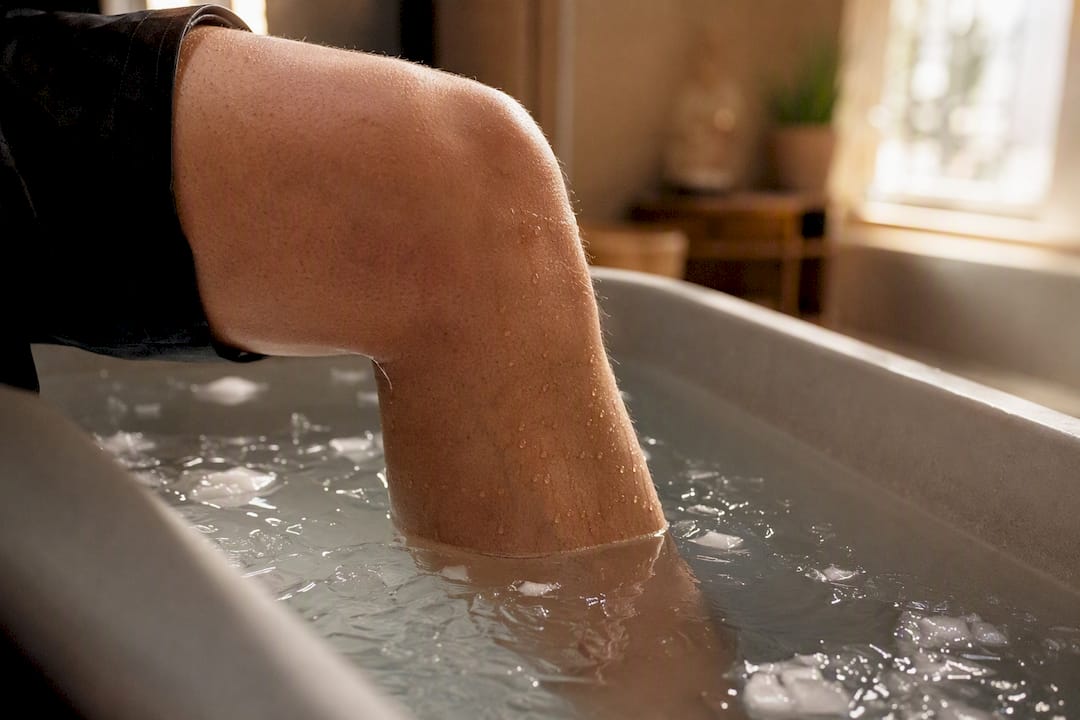
Vasoconstriction reduces local swelling and slows the inflammatory cascade that would otherwise build up around damaged muscle fibers. Less swelling means less pressure on nerve endings, which is a big part of why soreness eases. It’s a legitimate anti-inflammatory effect, not just a numbing trick.
But that same vessel-narrowing works against you in a specific scenario. Reduced blood flow to muscle tissue also slows the delivery of amino acids and other nutrients your body needs to repair and build muscle fibers. Research on fatigue recovery and exercise performance has flagged this exact mechanism as a plausible explanation for why cold immersion immediately after resistance training may blunt hypertrophy signaling. Your body wants a flood of nutrients to the muscle after a heavy lift. Cold water restricts the very pathway carrying them.
There’s also a neural component that’s easy to underestimate. Cold exposure activates a gating effect on pain signals traveling to the brain, essentially turning down the volume on discomfort while also triggering a jolt of alertness through the nervous system. That combination, less pain plus more alertness, explains why so many people report feeling sharper and less achy within minutes of getting out, even before any measurable biomarker has changed.
A distinction clinics use constantly: whole-body immersion versus partial immersion (legs and hips only). Partial immersion delivers much of the same local soreness relief while triggering a smaller systemic cold shock response, meaning less strain on heart rate and blood pressure. It’s a meaningful safety consideration, not just a comfort preference.
What’s happening in the water, mechanism by mechanism:
Vasoconstriction narrows blood vessels, reducing localized swelling and inflammatory buildup
Reduced blood flow can slow nutrient delivery to muscle tissue during the repair window
Neural gating dampens pain signals while raising alertness
Partial immersion lowers systemic cardiovascular strain compared to full submersion
Cold water doesn’t heal muscle tissue directly. It changes the environment around the damage, and that environment shift is either helpful or counterproductive depending entirely on what your body is trying to accomplish next.
When a Cold Plunge Helps and When It Works Against You
Timing decides whether a cold plunge for recovery helps you or quietly undercuts your training goal. The same 10 minutes in cold water can be a smart recovery tool on Tuesday and a mistake on Thursday, depending on what you trained and what you’re training for next.
Multi-day tournaments or back-to-back sessions. When you need your legs to work again in 18 hours, not two weeks, short-term soreness relief is exactly what you’re optimizing for. Cold immersion between matches or tournament days is one of its strongest, best-supported use cases.
General fitness and mixed training weeks. If you lift, run, and play recreational sports without chasing maximum muscle size, plunging once or twice weekly after your harder sessions is a reasonable, low-risk habit. Most recreational users do fine with one to three sessions per week rather than daily use.
Immediately after heavy resistance training aimed at hypertrophy. This is the scenario to avoid. If building muscle size is your actual goal this training block, plunging right after your lift risks dulling the very inflammatory and nutrient-delivery signals that drive adaptation. Delay the cold exposure by at least a couple of hours, or skip it that day and use active recovery instead.
Endurance blocks with frequent hard efforts. Runners and cyclists stacking multiple hard sessions in a week tend to see the clearest benefit, since the goal is staying functional for the next session rather than maximizing muscle growth.
The frequency question comes up constantly in clinic conversations. There’s no evidence that daily cold plunging outperforms a more moderate schedule for most recreational exercisers, and overusing it can mean chronically blunting adaptations you’re working hard to build elsewhere. Match the tool to the week’s actual demand, not to a routine you saw online.
A Safe Cold Plunge Protocol: Temperature, Time, and What to Do After
Here’s a protocol grounded in what the research actually supports, not what looks dramatic on video.
Stick to a temperature range between 10°C and 12°C for most healthy adults starting out. Studies testing ranges from 5°C to 15°C found no single number proven superior, so there’s no scientific reason to chase the coldest tub you can find. Extreme cold adds risk without adding proven benefit.
Limit sessions to 3 to 8 minutes. Research on cold exposure suggests most measurable physiologic effects occur within the first two to five minutes, and pushing longer or colder mainly increases discomfort and risk rather than results. Diminishing returns set in fast here.
A conservative, evidence-aligned routine:
Water temperature: 10°C to 12°C
Duration: 3 to 8 minutes, starting at the lower end if you’re new to it
Frequency: occasional use weekly, adjusted around training goals
Immersion type: partial (legs and hips) if you have any cardiovascular risk factors, whole-body only if cleared and comfortable
Exit plan: get out immediately if you feel dizzy, short of breath, or notice chest discomfort
Pre-screening matters more than most people assume before their first plunge. Ask yourself honestly: do you have any diagnosed heart condition, uncontrolled blood pressure, or a history of fainting in cold water? If yes, get clearance from a doctor first. This isn’t a formality. Cold shock response causes a rapid spike in heart rate and blood pressure the moment you submerge, and that spike is where real risk lives.
After you get out, warm up gradually with dry clothing and light movement rather than a hot shower immediately, which can cause blood pressure to swing again as vessels rapidly dilate. Avoid alcohol before or after a plunge since it interferes with your body’s ability to regulate temperature and judge how cold you actually are.

Pro Tip: Keep a towel and warm layers within arm’s reach before you get in, not after. Fumbling around cold and wet looking for a jacket is when people make poor decisions about how long to stay submerged.
Who Should Avoid Cold Plunges (and the Warning Signs to Watch For)
Cold plunges aren’t risk-free for everyone, and the cardiovascular response is the main reason. The moment your body hits cold water, heart rate and blood pressure spike sharply as part of the cold shock response.
People with diagnosed arrhythmia, uncontrolled hypertension, or any history of fainting during cold exposure face genuinely elevated risk. Health-system guidance, including a clinical explainer from Mayo Clinic Health System, recommends screening for cardiovascular risk factors before recommending cold immersion, and abstaining entirely for anyone with unstable heart conditions.
Additional situations that call for caution or a full skip:
Raynaud’s phenomenon, which causes extreme, painful blood vessel constriction in fingers and toes in response to cold
Uncontrolled high blood pressure that hasn’t been evaluated or managed by a physician
Pregnancy, where the sudden cardiovascular shift warrants a direct conversation with an OB provider first
Open wounds, skin infections, or recent surgical sites that shouldn’t be submerged in shared or untreated water
A history of fainting, seizures, or panic responses triggered by sudden cold exposure
If dizziness, chest pain, numbness, or shortness of breath show up at any point during a plunge, get out immediately and seek medical attention if symptoms don’t resolve quickly once warm. These aren’t signs to push through. They’re signals the cardiovascular stress has exceeded what’s safe for that moment, regardless of how fit you are otherwise.
Anyone managing an existing heart or circulatory condition should treat a first cold plunge the way they’d treat starting a new exercise program: with a conversation with their doctor first, not a leap into the tub.
Cold Plunge Protocols by Sport and Training Goal
Generic advice fails here because a marathoner and a powerlifter need almost opposite approaches to cold immersion.
Endurance athletes. Use moderate temperatures around 9°C to 12°C for 8 to 15 minutes after hard runs, long rides, or intervals. Research on protocol optimization across exercise modalities points to this range as favorable specifically for endurance-style recovery, likely because the muscle-damage pattern from prolonged effort responds well to the anti-inflammatory window cold water creates.
Strength and hypertrophy athletes. Delay cold immersion by two to four hours after resistance training if muscle growth is the priority, giving the nutrient-delivery and inflammatory signaling window time to do its job first. On heavy lifting days, consider contrast therapy or active recovery like light cycling or mobility work instead, saving the plunge for a true rest day.
Competition and tournament settings. A brief, moderate-temperature plunge between events or match days restores a sense of readiness and reduces the soreness that compounds across a multi-day tournament. Keep sessions short, rehydrate immediately afterward, and prioritize warming back up before your next warm-up begins.
Pro Tip: If you’re mid-tournament and unsure whether to plunge, ask what tomorrow demands. If you need your legs fresh in under 24 hours, cold water is one of your better options. If tomorrow is a rest day, active recovery works just as well without any cardiovascular stress.
None of these protocols require guesswork if you match the tool to the actual demand in front of you rather than a routine borrowed from someone training for a different goal entirely.
How Compassion Chiropractic Builds Cold Plunge Into a Recovery Plan
At Compassion Chiropractic, we treat cold plunge as one piece of a broader recovery picture, never a stand-alone fix. Our approach starts with an actual assessment, not a default recommendation, because the right protocol depends on what brought a patient in and what their body can safely handle.
A typical workflow looks like this: a patient comes in with soreness, an old injury flare, or a training load that’s caught up with them. We assess mobility, ask about cardiovascular history, and screen for the contraindications we’ve outlined above. If cold plunge fits their situation, we introduce it as a supervised, short session in our clinic’s plunge tub, paired with adjunct therapies like electrotherapy, red-light treatment, or targeted chiropractic adjustments depending on what’s actually driving their discomfort.
That pairing matters more than the plunge alone. Cold water eases inflammation and soreness, but it doesn’t correct joint restriction or postural imbalance sitting underneath chronic pain. Combining it with hands-on rehabilitation care addresses both the acute discomfort and the underlying mechanical issue driving it.
We’ve built our reputation since 2009 on affordable, personalized care that treats recovery as a whole picture, not a single trendy tool. Cold plunge earns its place in that picture when it’s used with intention, screened properly, and paired with the right adjunct therapy for the person in front of us.
Does Cold Plunging Work Partly Because We Expect It To?
Some of what people feel after a cold plunge almost certainly comes from expectation, not biology alone, and that’s not a knock on the practice. It’s how a lot of effective recovery tools work.
Cold water delivers an intense, undeniable sensory jolt. That jolt itself creates a strong belief that “something happened,” which research on pain perception consistently shows can genuinely lower how much discomfort someone reports afterward, independent of the measurable biomarker changes. The mind’s expectation and the body’s inflammatory response aren’t separate systems fighting for credit. They work together.
There’s also a psychological ritual effect worth naming honestly. Committing to something uncomfortable on purpose, and following through, builds a sense of control and discipline that carries into how someone approaches training generally. Athletes who plunge consistently often report feeling mentally sharper and more resilient heading into hard sessions, a benefit that’s real even if it’s harder to measure in a lab than creatine kinase levels.
None of this diminishes the biomarker evidence from earlier sections. It means the full recovery benefit a person experiences is likely a genuine mix of measurable physiology and the very real psychological lift of doing something hard on purpose. Both halves count.
Setting Up a Cold Plunge: Tubs, Ice, and Hygiene Basics
Home cold plunge setups range from a stock tank filled with bagged ice to dedicated chillers that hold a set temperature automatically. Whichever route you choose, a few basics protect both safety and water quality.
Tub choice matters less than consistency. A simple insulated stock tank works fine for occasional use if you’re willing to manage ice manually. A dedicated chiller unit costs more upfront but keeps temperature stable session to session, which matters if you’re trying to follow a specific protocol rather than guess at how cold the water actually is.
Ice sourcing adds up fast. Getting a stock tank down into the 10°C to 12°C range typically requires a meaningful amount of bagged or block ice per session, which becomes expensive and inconvenient for frequent use. This is one practical reason clinics and gyms increasingly favor chiller-equipped tubs for anyone plunging more than occasionally.
Hygiene is not optional. Standing water without filtration or sanitation becomes a bacteria risk within days, especially with multiple users. A basic filtration and sanitation system, or committing to draining and cleaning after each use for a single-person setup, prevents skin infections and keeps the water actually usable long term.
For anyone unsure about managing all of this at home, a supervised clinic setting removes the equipment guesswork entirely while adding the safety screening a first-timer genuinely benefits from.
Primary Sources and Further Reading
The strongest evidence behind this guide comes from recent meta-analyses and systematic reviews, alongside clinical explainers aimed at practical, everyday use.
Temperature-dependent effects of post-exercise cold-water immersion on recovery, a systematic review and meta-analysis quantifying DOMS and biomarker reductions across pooled trials.
Effects of cold water immersion after exercise on fatigue recovery and exercise performance, a meta-analysis testing temperature ranges from 5°C to 15°C.
Cold water immersion protocol optimization across exercise modalities, a network meta-analysis comparing endurance versus strength-training outcomes.
The effects of hydrotherapy and cryotherapy on recovery from acute post-exercise induced muscle damage, a network meta-analysis ranking recovery modalities against each other.
Cold exposure and recovery: clinical and mechanistic insights, covering the physiology behind short-exposure effects.
Mayo Clinic Health System’s clinical guidance on cold plunges after workouts, a practical safety-focused explainer.
What the Research Actually Tells Us to Prioritize
The conventional advice on cold plunging treats it as a universal recovery hack, colder and longer must be better, use it after everything. The meta-analyses don’t support that framing at all. They support a narrower, more useful conclusion: cold water immersion is genuinely effective for short-term soreness and biomarker reduction, concentrated in a specific 24-hour window, and genuinely counterproductive when used carelessly right after a hypertrophy-focused lift.
What’s overrated is the temperature obsession. No study has proven that colder water outperforms a moderate 10°C to 12°C range, yet plenty of marketing implies otherwise. What’s underrated is timing discipline, deciding in advance whether tomorrow’s demand calls for recovery speed or long-term adaptation, and choosing accordingly.
If you take one thing from this guide, prioritize matching the tool to the goal, not the trend. Screen yourself honestly for cardiovascular risk first. Then let your training calendar, not a stopwatch chasing the coldest tub in the gym, decide when a plunge earns its place.
— James
Ready to Add Supervised Recovery to Your Care Plan?
Reading about cold plunge protocols is one thing. Stepping into a properly chilled tub with someone who’s screened you for cardiovascular risk first is another. Compassion Chiropractic gives you that second option without the guesswork of building a home setup or wondering if you’re using the right temperature for your training week.

We built our practice on affordable, walk-in access since 2009, which means you don’t need to book weeks out to get a supervised plunge session paired with an actual assessment of what your body needs. Our team pairs cold immersion with adjunct therapies like chiropractic adjustments and rehabilitation work when soreness is masking a mechanical issue underneath it, something a stock tank in your garage can’t assess. If you’re managing a heart condition or unsure whether cold immersion is safe for you, our staff can screen that in person before you ever get in the water.
Ready to see what a supervised recovery plan looks like for your training week? Book an appointment online and let’s figure out where cold plunge fits into your routine.
This article is general information, not a substitute for advice from a qualified doctor. Consult a qualified healthcare professional about your own circumstances before acting on anything here.
Sources
Recommended
Comments